When you buy a new flat panel TV, it is delivered in the factory default picture mode that is engineered to look best in harsh, brightly lit retail showrooms. Manufacturers typically do this by artificially boosting sharpness and blue tints to make it appear brighter to catch a consumer’s eye. However, these settings are far from ideal for any residential environment.
If you’re installing a projector, the situation is far more complicated. Projector manufacturers cannot anticipate the size, shape, gain, color or surface technology of the screens their products will be matched with in the field. There’s also significant variation in the viewing room environments (decor, etc). Therefore, projectors must be engineered with extensive calibration utilities for optimizing multiple real-world parameters.
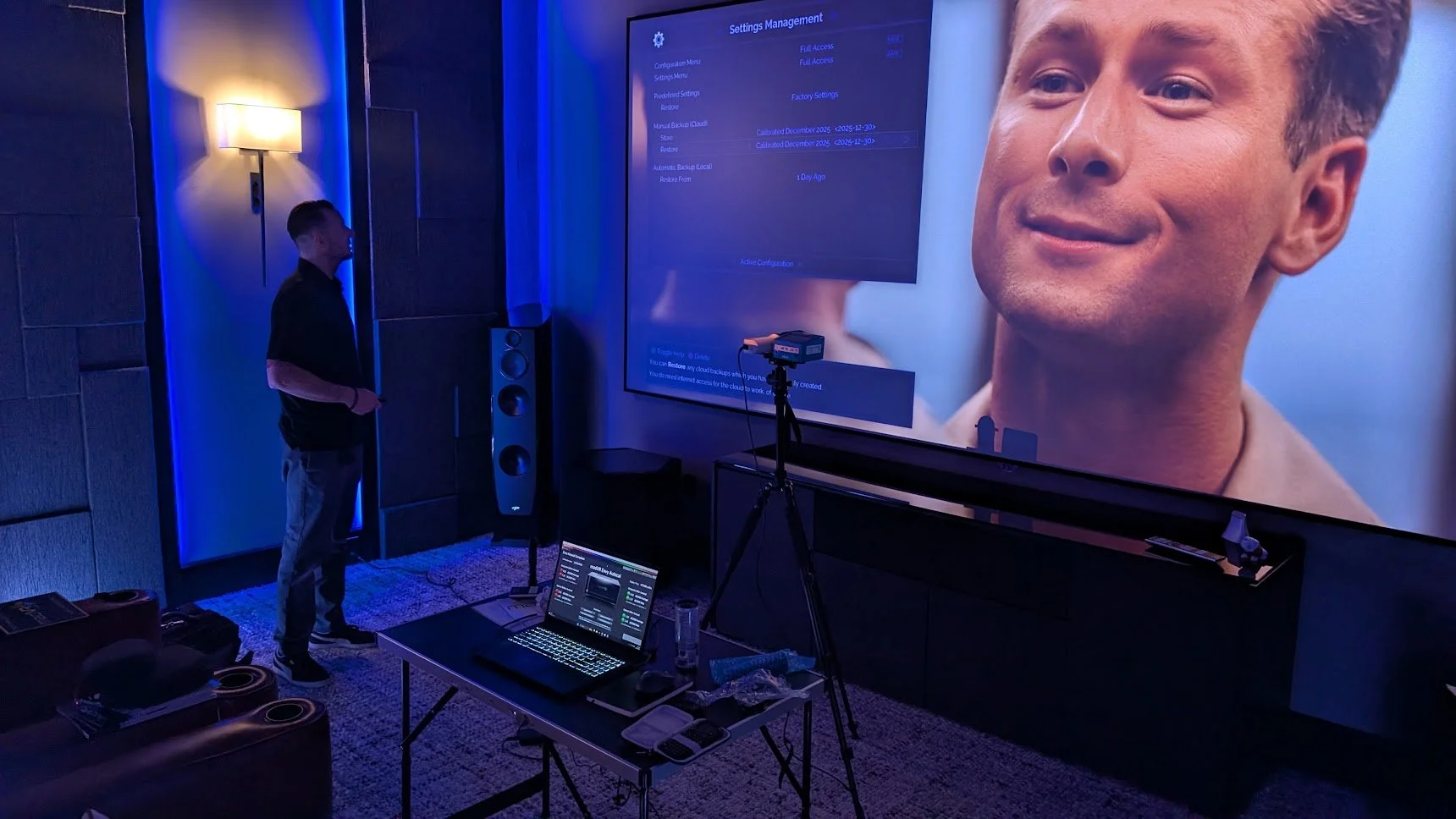
Jason Dustal from MadVR in the process of calibrating a projector using ISF professional workflows
Honoring Artistic Intent
The brilliant creators of movies and TV content invest hundreds of millions of dollars and years of their lives bringing their dreams to your screens. However, their content may not be shown exactly as they intended if the display is using any of the standard out-of-the-box settings.
Calibrating a display adjusts its settings to a room's specific lighting and viewing conditions. More importantly, calibrating a display means that the vision that’s played on it will be as it was intended to be seen.
This is done by matching the display to the same international industry display standards that content creation studios adhere to. That way, the viewers see the program the way the directors and cinematographers intended it to be seen. This process ensures color accuracy, optimum brightness, correctly shows shadow details by precisely setting EOTF (gamma), and boosts contrast, ensuring more natural-looking scenes and skin tones, and a more dynamic picture.
So, in summary, the display is actually your “digital portal” that should enable you to experience a faithful representation of the creator's original artistic vision, rather than the "vibrant" or "oversaturated" modes manufacturers use to grab attention in brightly lit stores.
The Tech Deployed to Calibrate Your Display
White balance
TV cameras and home TVs are all just RGB machines. These three primary colors must be white-balanced to standards in both production and reproduction for TV systems to work properly. Calibrators use meters onsite to match a display’s white balance for color fidelity.Improved accuracy of all colors
In addition to White Balance the Hue, Saturation and Luminance of the colors of Red, Green, Blue, Cyan, Magenta and Yellow can now be tuned in every major TV brand.Enhanced Detail
Accurate EOTF (Gamma) tracking preserves the shadow details intended to be seen that are all too often crushed and preserves all the details in the brightest scenes that are all too often washed out.Consistency
Calibration ensures consistent picture quality with today’s very different sources. We now deliver content multiple ways. We are delivering content in the old Standard Dynamic Range standard, the wonderful new 4K HDR formats such as HDR10, HDR10+, Dolby Vision and soon many live broadcasts using Hybrid Log Gamma HDR.
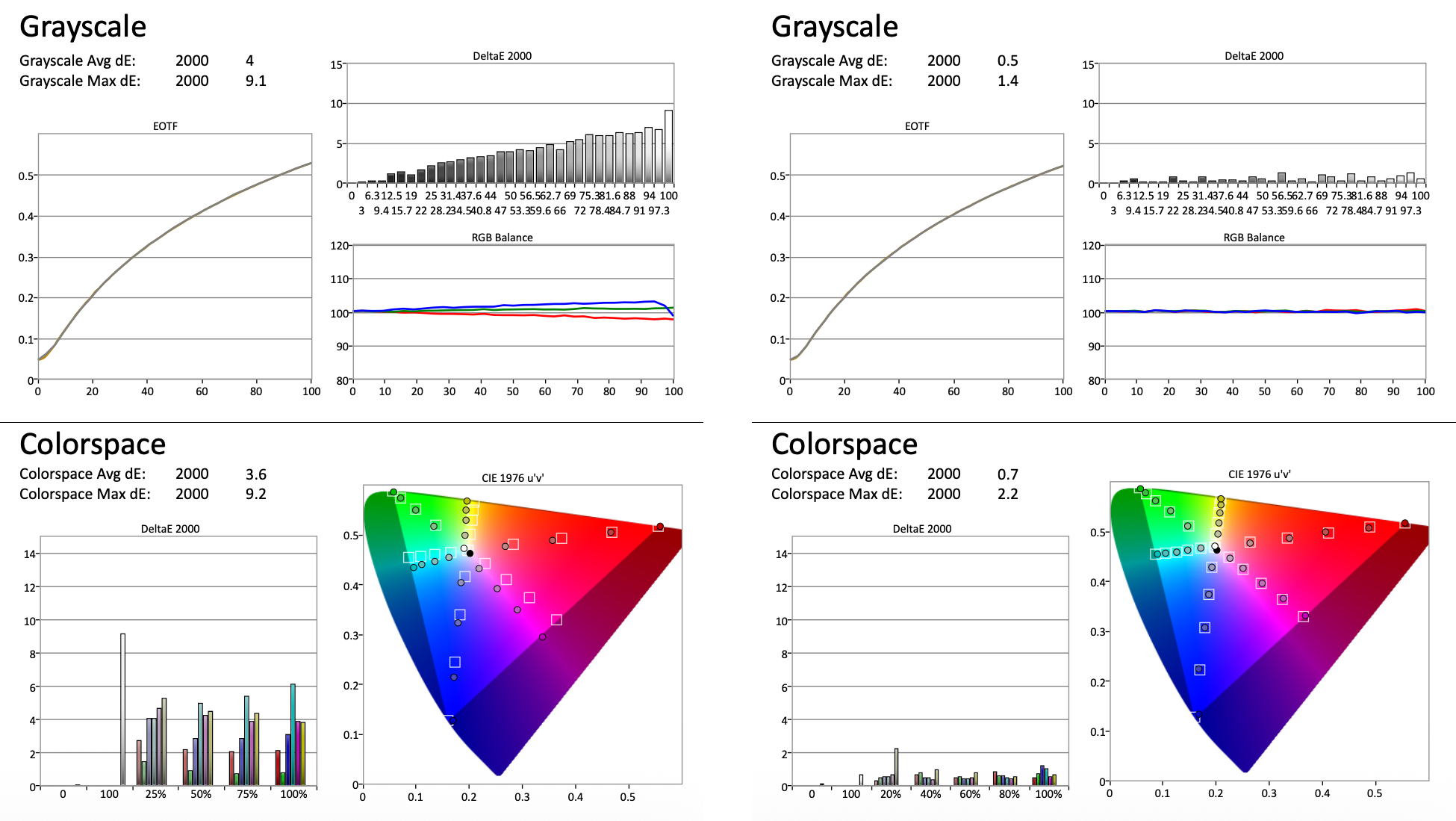
Left: Barco projector pre-calibration. Right: Post-calibration.
The Dream Behind AV System Design & Installation
Video calibration and audio calibration share the same goals.
Setting levels in audio and setting levels in video are equally important. Both aim to accurately and faithfully deliver the experience intended by the content creators by calibrating AV system’s components to the environment they are installed in.
The Ultimate goal - Audiovisual systems designed professionally and then calibrated professionally can deploy current UltraHD HDR formats and object-based audio to create the current prime directive of our industry – an “Immersive Experience.”
Thanks to Jason Dustal, MadVR Senior Field Specialist & ISF calibrator & instructor, for providing the images in this article.